How to prepare your marketing data for peak season

Our seventh Penguin Webinar—igloonet's educational webinar series—took place on Thursday, September 25. This time, Adam invited Jirka Guňka of Bidding Fox to spend an hour looking at peak-season data preparation from three angles: campaigns, products, and customers. The evening closed with Penguins Unplugged, our in-person event series, where a smaller group discussed season preparation, data democratization, and vibe analytics. If you missed the webinar or want a reminder of what to have ready before peak season, read on.
Better late than never
When peak season is already underway or just around the corner, you may wonder, "Isn't it too late to prepare?" It is a fair question. If you are starting from scratch with data, you may not transform the current season. But that does not mean you should throw in the towel. Start collecting data now, and you will be better prepared for the next seasonal cycle.
The first step is collecting data. In marketing, we simply can't do without it. At a minimum, we need measurements at the campaign, product, and customer levels. You don't have to reach for a complex implementation right away, at least in the beginning. Even basic data can provide plenty of useful insight—for example, margin calculated from purchase and selling prices, new customers identified by unique email addresses, or spend assigned to product categories.
On the technical side, it helps to have at least the basics under control. The bare minimum is implementing GA4 and connecting it to BigQuery. BigQuery gives us the granularity we need to evaluate all three views: campaigns, products, and customers. Sending the data to BigQuery also prepares it for the next steps, including modeling, transformation, automation, and automated reporting.
If you have not connected the two yet, don't delay. We can't load historical GA4 data into BigQuery retroactively, so we recommend putting the connection in place before the season. The whole process takes only a few moments, but if you run into a problem, don't hesitate to get in touch!
Start with a forecast
Adam covered predictive modeling with Lucka in our first webinar. A forecast gives seasonal planning a solid foundation. It does not have to be sophisticated or complicated, but we need at least an expert estimate. During the season, we can use it to see whether we are meeting the plan and adjust our strategy accordingly. As Jirka said: "It's good to know where we're going, and at the same time to be able to change direction or tactics."
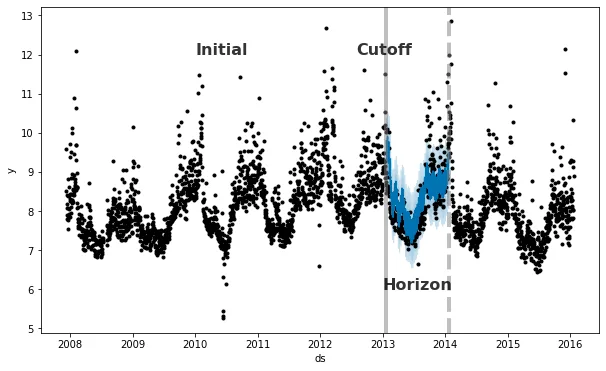
For a simple forecast, we can start with results from the past two years and performance in the current period. Together, this historical and current data provides the basis for an expert estimate of this year's season.
Sharing information across departments is an important part of forecasting. Campaigns are often managed by someone without inside knowledge of the client's business. They may misjudge the length of the season or fail to identify seasonal products. Clients take some information for granted and may never realize that someone else does not know it. So ask—and keep asking until you have everything you need. Without that internal knowledge, even a potentially successful season is doomed.
Connecting data is equally important, especially marketing, product, inventory, and financial data. We want our decisions to start with data, but we also need to understand its context.
Plan your seasonal product mix
From a product perspective, the key is to define our goals and expectations. Do we want to maximize profit, clear old stock, or acquire new customers? Once we have the information and answers we need, we can create a timeline. We mark the usual seasonal moments—Valentine's Day, Mother's Day, Easter, Christmas, and so on—then assign products that could attract attention at each point. The campaigns follow from there.
Historical data helps us identify products with strong seasonal peaks and compare them with current signals, such as on-site searches, product availability alerts, or wishlists. We recommend comparing current trends with off-season sales. This can reveal, for example, whether demand for products that sold in August last year is shifting into September.
Inventory and logistics are urgent concerns. Selling a large number of products is not especially difficult when we don't care about efficiency. Having enough stock is often the bigger problem. As a rule, we don't want to sell things we don't have on hand. A customer may be interested in a product but buy from a competitor because our delivery time is too long. Or they may buy from us, wait far too long for the delivery, and have a much worse shopping experience as a result. Next time, they won't come back—and they may leave a negative review too.
Logistics capacity can create a similar problem: the products are in stock, but we can't deliver them. Customers are especially sensitive to logistics problems at Christmas, when everyone needs their order by a specific day.
Large stocks present a different question: do we need to promote these products at all, especially if we do not plan to restock them? Once again, data, forecasts, and purchase history are our best guides. Some products are likely to sell without marketing support. Campaigns could reduce margin unnecessarily, through either advertising costs or discounts. We also risk selling out too quickly and having nothing left to sell or promote later.
This is another reminder of why good data preparation and connected systems matter before the season. A marketing specialist needs to know whether the products they are about to promote are in stock and how many orders the business can handle each day. If that information is unavailable, inventory feeds—for Heureka, a Czech price-comparison service, or marketplaces, for example—can at least provide an overview of the units in stock, though they will not reveal a potential logistics bottleneck.
Pricing and promotional products
Pricing is the be-all and end-all of a successful season. We can have the best product and build great campaigns around it, but if a competitor offers a significantly lower price, all that effort may be in vain. A price that is too low compared with the competition can also be a problem. It may drive strong sales, but it puts pressure on logistics while generating very little margin.
Low prices are a common symptom of poorly designed processes. A specialist handling prices manually may simply forget to restore them after an official promotion ends. Manual pricing also makes competitor checks harder: the specialist has to work through multiple comparison sites, a slow and inefficient process.
Specialized tools can save us from checking prices and competitors manually. The Sortiment Report from Heureka shows the 9 cheapest and 9 most expensive prices along with our position, helping us avoid unwanted extremes. Another useful tool is Pricing Fox, which shows our most frequent competitors and the price level at which we operate. If we provide an XML feed with purchase prices, it also reveals whether competitors—or sometimes even we—are selling below our purchase price. Both tools can be used for free.
For more sophisticated competitor price monitoring, we can use dedicated price checkers. These don't depend on comparison sites; they scrape data directly from competitors.
The goals we set above should guide our pricing. They usually fall into four categories:
- Maximizing order volume: for example, because we need to generate cash flow or secure better terms from suppliers.
- Selling out stock: we deliberately lower our margin because we need to clear the warehouse, perhaps to prepare for a new season. We design the promotion to steer customers toward older products rather than new ones.
- Maximizing profit: we focus on promoting high-margin products on which we earn a lot even with a discount.
- Acquiring new customers: we sell at a lower margin, sometimes even a negative one, knowing that the investment in customer acquisition will pay off in the long run.
Working with campaigns and customers
Our campaigns must also reflect the goals and expectations we have set. We segment customers accordingly, always remembering that their behavior changes during peak season and calls for different responses and approaches.
Adam swears by cohort analysis. It shows us how customers' purchasing behavior differs in and out of season. We can discover which customers regularly return in the run-up to Christmas, what they search for and buy, and what kinds of customers visit after Christmas during sales and clearance events.

We can also adjust the duration of remarketing lists to reach customers when they are considering another purchase and remind them, for example, of what they bought last season.
Identifying gift purchases is important for campaigns and can help us guide customers toward a gift. Once we recognize these purchases, we can adapt campaigns to offer preselected gifts and make the buying process easier. That also makes customers more likely to buy from us.
We don't have to identify gift orders on our own; customers can help. We just need to communicate the options clearly during checkout. In the cart, customers might mark an order as a gift, add a personal message, or choose gift wrapping. These extras usually cost us nothing, or so little that identifying a gift order pays for itself many times over.
Gift vouchers and coupons deserve their own approach. We can be almost one hundred percent certain they are gift purchases, but they are very specific products bought by a particular group of customers. This group deserves its own segment for future seasons and campaigns. The buyers probably don't shop with us regularly or know our full range, and the true customer is the person who receives the voucher. We can go a step further and segment the customers who redeem their vouchers. They give us an opportunity to win sales outside the peak season, so it pays to target them with product campaigns.
The in-person meetup
After the webinar, Penguins Unplugged brought together people who wanted to ask Adam and Jirka more about preparing data for the season. We don't want to give away too much, because "what happens at Penguins Unplugged stays at Penguins Unplugged." We can say that alongside seasonal data preparation, we also talked about vibe analytics and data democratization.

To find current Penguin Webinar and Penguins Unplugged announcements, visit our events page.
Are you ready for the season?
You don't have to do everything discussed in the webinar to prepare for the season. What matters is building a foundation and, at a minimum, collecting data you can use in the next seasonal cycle. The more you manage now, the better prepared you will be. Use the points above as a practical checklist, and get in touch if you would like to discuss them.
This article was translated from the Czech original on the igloonet blog.